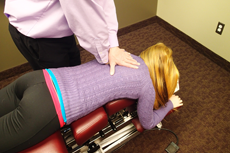
Lower back pain can become noticeable when standing up because the body is transitioning from a relatively still seated position to one that requires the hips, pelvis, spine, and surrounding muscles to move and support body weight differently. Prolonged sitting, temporary stiffness, muscle fatigue, joint sensitivity, and certain back conditions can all influence how that transition feels, but the symptom alone cannot identify its exact cause.
It can be confusing when sitting feels tolerable yet the first few seconds after getting out of a chair trigger an ache, catch, or sense of stiffness in the lower back. For some people, the discomfort disappears after several steps. For others, it continues or becomes increasingly frequent.
Understanding when the pain occurs and what happens after standing can provide useful clues when deciding whether it is simply a temporary response to staying still or something worth having evaluated.
Why Can Sitting Feel Fine Until It Is Time to Stand?
Sitting and standing place the body in different positions and require different patterns of muscular activity.
During a long period of sitting, the hips generally remain flexed and the lumbar spine stays relatively still. Depending on the chair, workstation, driving position, and individual sitting habits, the lower back may also remain slightly flexed or supported for an extended time.
The body then has to transition out of that position when a person stands.
The hips extend, the trunk moves upright, and the muscles that help stabilize the torso become involved in supporting an upright position. If the lower back has become stiff or sensitive while sitting, that change may make discomfort suddenly noticeable.
This is one reason pain can seem to “appear” only after getting up even though the preceding period of sitting may have contributed to the symptom.
Prolonged sitting has been recognized as one potential contributor to both acute and chronic back discomfort, although sitting itself is not sufficient to explain every case of lower back pain.
Does Pain When Standing Mean Something Is Out of Place?
Not necessarily.
A painful sit-to-stand movement does not prove that a vertebra, disc, pelvis, or other structure has moved “out of place.” Lower back pain can develop through numerous mechanisms, and most cases cannot be traced to one specific damaged structure.
The World Health Organization reports that approximately 90% of low back pain is nonspecific, meaning a specific disease or structural cause cannot be identified.
That is an important point for anyone looking for lower back pain treatment.
A symptom pattern can help guide an evaluation, but it should not be used to diagnose a problem by itself. Two people may both hurt when rising from an office chair while having different contributing factors and different treatment needs.
Why Can the First Few Steps Feel Particularly Stiff?
When the body stays in one position for a while, the first movements afterward can sometimes feel less comfortable.
Consider what happens after sitting through a long meeting or driving for an extended period. A person may stand and initially feel as though the lower back does not want to straighten completely. After walking several steps, that sensation may lessen.
Temporary stiffness can contribute to this experience.
The muscles surrounding the spine and hips also need to shift from the demands of sitting to those of standing and walking. If those tissues are already fatigued, sensitive, or accustomed to staying relatively still for long periods, the transition can feel uncomfortable.
However, feeling better after a few steps should not automatically be interpreted as evidence of a particular diagnosis. The pattern is simply one piece of information that may help a healthcare provider understand what is happening.
Can the Way Someone Sits Make a Difference?
It can, but the issue is more complicated than maintaining one supposedly perfect posture.
People frequently hear that they must sit completely upright throughout the day to prevent back pain. Research does not support such a simple rule.
Human bodies are built to move. Remaining in one posture for a long time—whether sitting or standing—may become uncomfortable for some people.
Someone working at a desk in Gresham, OR, for example, may alternate between leaning forward toward a computer, sitting upright, and relaxing against the back of a chair. The problem may not be that one of those positions is inherently wrong. It may be spending too much time without meaningful position changes.
A systematic review examining standing during desk work also found that simply replacing prolonged sitting with prolonged standing did not reliably result in less low-back discomfort.
In practical terms, movement variation can matter more than chasing one perfect position.
What Everyday Situations Can Trigger Pain During the Sit-to-Stand Transition?
This type of discomfort can appear in many ordinary situations.
Getting Out of a Desk Chair
Someone may work comfortably for an hour or more, then feel lower-back stiffness as soon as they stand. The symptom may be especially noticeable after periods of concentrated work when position changes have been infrequent.
Standing Up After Driving
Car seats keep the hips and lower back in a relatively fixed position. After a long drive, the first movement out of the vehicle may feel different from getting out after a five-minute trip.
Rising From a Soft Couch
Deep couches can position the hips lower than the knees and require more effort when standing. A person who already has a sensitive lower back may notice symptoms during that transition.
Getting Up After a Long Meal or Event
Restaurants, movie theaters, sporting events, and social gatherings can involve longer sitting periods than usual. Someone who rarely has symptoms may notice stiffness afterward.
These situations do not necessarily indicate an injury. Repetition and progression matter.
Does the Location of the Pain Matter?
Yes.
Describing where discomfort occurs can help a healthcare professional understand the symptom pattern.
Someone may experience pain:
- Directly across the center of the lower back
- More strongly on one side
- Near the lower back and upper buttock
- Through the buttock or hip region
- Down part of the leg
- Along with numbness or tingling
Localized lower-back discomfort after sitting is different from symptoms that extend into a leg, although neither pattern provides a diagnosis by itself.
Certain disc-related complaints, for instance, can be aggravated by sitting and bending, while some presentations involving lumbar facet joints may produce stiffness following prolonged sitting and become uncomfortable with extension. Clinical assessment is needed because symptom patterns can overlap.
When Is Repeated Pain After Sitting Worth Paying Attention To?
An occasional stiff back after an unusually long day does not necessarily indicate an ongoing problem.
It becomes more useful to pay attention when the same pattern repeats.
Questions to consider include:
- Does the pain occur almost every time after sitting?
- Is less sitting required before symptoms begin?
- Does the discomfort disappear after walking, or does it remain?
- Has the pain become more intense?
- Does it interfere with work, driving, exercise, or sleep?
- Is pain beginning to travel into the buttock or leg?
- Are numbness, tingling, or weakness also present?
Looking at trends provides more useful information than focusing on one isolated episode.
Someone who experienced stiffness once after a cross-country flight presents a different situation from someone who develops lower-back pain every time they stand from their office chair.
Should Someone Stretch Immediately When They Stand Up?
Gentle movement may feel good for many people, but aggressive stretching is not automatically the right response to every episode of back pain.
It may be more reasonable to stand gradually, take a few comfortable steps, and allow the body to begin moving again instead of immediately forcing the lower back into a deep stretch.
A person can also experiment with changing position more frequently before symptoms develop.
For example:
- Stand periodically during long desk sessions.
- Walk briefly when practical.
- Change seated positions instead of trying to remain completely still.
- Adjust a workstation if it requires prolonged leaning or reaching.
- Break up long periods of driving when possible.
- Resume normal activity within comfortable limits rather than relying on prolonged bed rest.
These strategies are general considerations rather than a replacement for individualized back pain treatment when symptoms persist.
Does Moving More During the Day Help?
For many people, reducing long periods of uninterrupted sitting is a practical place to start.
That does not mean someone needs to avoid sitting entirely or spend an entire workday standing.
In fact, standing continuously can also produce back discomfort. A systematic review of laboratory research found an association between prolonged standing and lower-back symptoms, with responses varying between individuals.
Instead of thinking in terms of “sitting is bad” and “standing is good,” it can be more useful to think about variation.
Sit when sitting makes sense. Stand when standing makes sense. Walk periodically. Adjust positions as needed.
People often tolerate a variety of positions better than spending hours in any single one.
When Might Chiropractic Evaluation Be Considered?
When lower-back discomfort repeatedly occurs during normal activities, an evaluation can help clarify the pattern and determine what type of conservative care may be appropriate.
A chiropractic assessment commonly considers factors such as symptom history, previous injuries, aggravating or relieving movements, activity demands, and how the back and surrounding areas move.
For someone in Gresham, OR, researching a chiropractor for lower back pain, the important question is not simply whether chiropractic care exists as an option. It is whether the person’s individual presentation has been appropriately evaluated before a treatment approach is selected.
That distinction matters because lower back pain treatment should not assume that everyone with the same symptom needs the same intervention.
Aspire Chiropractic markets chiropractic care for lower-back pain, along with related conservative services, but an appropriate plan depends on the individual’s findings rather than the keyword or symptom that brought them to the office.
When Does Lower Back Pain Need More Urgent Medical Attention?
Most episodes of low-back pain are not caused by a dangerous underlying condition, but certain symptoms require greater caution.
Prompt medical evaluation is appropriate when back pain develops with warning signs such as:
- New or progressive leg weakness
- Loss of bladder or bowel control
- Numbness in the groin or saddle area
- Significant trauma
- Fever with substantial back pain
- A known history that raises concern for infection, fracture, or cancer
- Sudden neurological changes
These symptoms should not be treated as ordinary stiffness from sitting.
An appropriate evaluation for persistent back pain also considers medical history and associated symptoms because lower-back discomfort can occasionally be related to conditions outside the musculoskeletal system.
How Common Is Lower Back Pain?
Lower-back pain is one of the world’s most common health problems.
According to the World Health Organization, 619 million people experienced low-back pain globally in 2020, and it remains the leading cause of disability worldwide.
Its prevalence is one reason it is important not to oversimplify the condition.
One person’s pain may follow prolonged sitting. Another person’s symptoms may develop after lifting. Some people experience intermittent episodes, while others have persistent discomfort.
There is no single explanation that applies to all of them.
What Should Someone Track Before Seeking Back Pain Treatment?
A few observations can make a healthcare evaluation more informative.
Instead of simply reporting, “My back hurts when I stand,” someone might note:
How long they were sitting.
Does pain happen after 15 minutes, an hour, or only after several hours?
What type of seat they were using.
A desk chair, vehicle seat, couch, and dining chair place the body in different positions.
Where the pain begins.
Is it centered in the lower back or mainly on one side?
What happens after standing.
Does walking make it settle within seconds, or does it persist?
Whether symptoms travel.
Pain, numbness, or tingling extending into a leg should be mentioned.
Whether the pattern is changing.
Increasing frequency or intensity can be significant even if each episode eventually settles.
Those details help move the conversation beyond simply labeling the symptom as “back pain.”
The Transition From Sitting to Standing Can Reveal a Pattern
Lower-back pain that first becomes noticeable when standing does not necessarily mean standing is the actual problem. The preceding period of sitting, the movement required to rise, the amount of time spent relatively still, individual tissue sensitivity, and other health factors can all influence what someone feels during that transition.
For occasional mild stiffness, changing positions more regularly and avoiding extended periods of inactivity may be reasonable. When symptoms repeatedly return, become more intense, spread into a leg, or interfere with normal activities, an individualized assessment can help determine an appropriate next step.
Effective back pain treatment begins with understanding the pattern rather than assuming every person who hurts after sitting has the same condition.