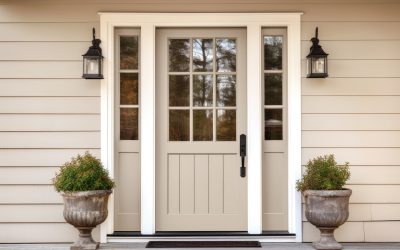
An interior door should use glass above eye level when a room needs natural light without creating a direct line of sight through the entire opening. Full-length glass is usually better when visual connection is important and privacy is less of a concern.
For Scottsdale homes, the decision often depends on room function, hallway orientation, available daylight, and how much visual separation is appropriate between adjoining spaces.
What Is the Main Difference Between Upper Glass and Full-Length Glass?
Upper glass keeps the lower portion of the door solid while allowing light to pass through the top section. This creates a stronger sense of enclosure than full-length glass.
Full-length glass makes the entire opening feel more transparent and visually connected.
The difference affects:
- Privacy
- Natural light
- Sightlines
- Visual openness
- Furniture visibility
- The amount of wood or framing in the design
Modern interior glass doors can use either approach depending on how the room should function.
When Is Upper Glass Better for Privacy?
Upper glass works well when homeowners want daylight but do not want a clear view into the room.
This can be useful for:
- Home offices
- Libraries
- Pantries
- Laundry rooms
- Secondary living areas
- Hallways
The glass can begin above normal eye level, limiting direct visibility while still allowing light from one space to reach another.
This creates a middle ground between a fully solid door and a transparent glass door.
How Can Upper Glass Help a Home Office?
A home office often needs both separation and natural light.
Full-length glass can make the office feel too exposed, especially if the door faces a busy hallway or living area.
Upper glass can provide:
- Daylight
- A sense of openness
- Greater visual privacy
- Separation from household activity
It can also reduce distractions because movement at floor level is less visible.
For many contemporary interior doors, this balance can make the room feel connected without sacrificing focus.
When Does Full-Length Glass Make More Sense?
Full-length glass works well when the goal is to maintain strong visual continuity.
It may suit:
- Dining rooms
- Libraries
- Interior courtyards
- Living areas
- Display spaces
- Rooms with attractive sightlines
A full-length glass door can make adjoining rooms feel larger and more connected.
It is especially effective in modern homes where transparency and natural light are part of the architectural design.
However, full-height glass should be selected only when the increased visibility makes sense for the room.
How Does Hallway Placement Affect the Decision?
Hallway location can strongly influence whether upper or full-length glass is appropriate.
A door facing a long hallway may create a direct sightline into the room.
If privacy matters, glass above eye level can prevent that view while still allowing daylight to enter the corridor.
A full-length glass door may work better when the room at the end of the hallway is intended to become a focal point.
The homeowner should stand at both ends of the hallway and consider exactly what will be visible when the door is closed.
Can Upper Glass Make a Dark Hallway Brighter?
Yes.
One of the strongest reasons to use upper glass is to transfer light into an interior hallway.
If an office, dining room, or living area receives natural light from exterior windows, upper glass can allow some of that brightness to reach nearby circulation spaces.
This can improve visual connection without making the room fully transparent.
The amount of light depends on:
- Glass size
- Door orientation
- Window placement
- Time of day
- Hallway depth
Custom interior doors can be designed with glass proportions that respond to these conditions.
How Should the Glass Height Be Determined?
The glass should begin at a height that balances privacy with light.
There is no universal measurement that works for every room.
Important factors include:
- Average eye level
- Door height
- Ceiling height
- Furniture placement
- Hallway position
- Room use
A taller door may support a larger upper glass section without making the solid lower panel feel too small.
Proportion matters. The glass should look intentionally integrated rather than inserted into the door as an afterthought.
How Much Solid Wood Should Remain Below the Glass?
The lower panel should provide enough visual weight to keep the door grounded.
If the solid portion is too short, the door may still feel nearly transparent.
If it is too tall, the glass may become too small to provide useful light.
The ideal balance depends on the overall door height and width.
Modern-style interior doors often use broad lower panels with simple upper glass sections, creating a clean division between privacy and openness.
Can Upper Glass Work With Contemporary Design?
Yes.
Upper glass can work especially well with contemporary interior doors when the framing is simple and proportional.
Common approaches include:
- One large upper glass panel
- Two vertically divided upper panels
- Narrow horizontal glazing
- Clean wood frames
- Minimal hardware
The glass does not need decorative divisions to feel architectural.
In many modern interiors, a simpler design creates a stronger result.
Should the Glass Be Clear?
Not always.
Clear glass provides the strongest light transfer and visibility.
Textured or obscured glass can offer more privacy while still transmitting light.
The choice depends on:
- Room function
- Interior sightlines
- Desired privacy
- Architectural style
- Amount of natural light
A home office may benefit from lightly obscured glass, while a dining room may work better with clear glazing.
The goal is to match the glass to the room rather than use the same treatment everywhere.
How Can Glass Coordinate With Other Interior Doors?
Not every interior door needs glass.
A home can combine solid and glazed doors while maintaining consistency through:
- Door height
- Wood species
- Panel proportions
- Hardware
- Frame dimensions
For example, a glass office door can relate to solid bedroom doors through the same lower panel proportions and wood character.
This creates a coordinated family of custom interior doors without making every opening identical.
How Does Full-Length Glass Affect Furniture Placement?
Full-length glass makes furniture and room layout more visible.
A desk, dining table, shelving unit, or seating arrangement may become part of the hallway view.
Upper glass reduces that effect because the lower portion of the room remains visually screened.
This can be useful in spaces that are functional rather than display-oriented.
Homeowners should review the room from the outside with the door closed before deciding which glass configuration will work best.
When Can Upper Glass Create a Better Visual Hierarchy?
Upper glass can make a door feel more private and substantial than a full-glass opening.
This can help differentiate room types.
For example:
- Full glass for a dining room
- Upper glass for an office
- Solid doors for bedrooms
The variations create a hierarchy based on room function.
That hierarchy can make an interior feel more intentional.
What Should Scottsdale Homeowners Consider Before Choosing?
Before selecting upper or full-length glass, homeowners should consider:
- Room function
- Privacy
- Hallway sightlines
- Natural light
- Door height
- Furniture placement
- Glass transparency
- Architectural style
- Nearby interior doors
The decision should be based on both sides of the opening.
A glass configuration that looks appealing from inside the room may create an unwanted view from the hallway.
Companies such as Anasazi Architectural Door create modern interior glass doors that can be developed around the proportions, architecture, and privacy needs of individual Scottsdale homes.
Upper glass is often the better choice when natural light is important but full visibility is not. Full-length glass works best when the goal is a stronger visual connection between rooms. The right balance depends on how the space needs to function every day.