Snapshot:
• Basement flood cleanup requires water removal, structural drying, and dehumidification within 24-48 hours to limit mold risk.
• Standing water in finished and unfinished basements calls for different handling based on materials and contamination level.
• Professional water extraction and moisture monitoring help confirm a basement is fully dried before repairs begin.
A flooded basement needs water extraction, drying, and dehumidification started within the first day or two to prevent mold growth and further structural damage. The longer water sits against drywall, flooring, or framing, the more likely secondary problems become, which is why response time matters as much as the cleanup method itself. Connect with Parkside Restoration to get help with basement flooding.
Basement flood damage cleanup in Joliet IL generally follows a sequence: stop the water source, remove standing water, dry the space, and then assess what can be salvaged versus replaced. Skipping steps or rushing the drying phase is one of the most common reasons basements develop lingering odors or mold months after the original flood.
Why Basements Flood in Joliet IL
Joliet, IL sits in a region where heavy spring rainfall, snowmelt, and aging residential plumbing all contribute to basement water intrusion. Older housing stock in and around the area often has foundation cracks, window wells, or sump pump systems that were not designed for current storm intensity.
Common causes include:
• Sump pump failure during heavy storms or power outages
• Foundation cracks that let groundwater seep in after saturated soil
• Sewer backups during high-volume rain events
• Burst or leaking pipes in unheated basement areas
Step-by-Step Basement Flood Cleanup Process
Basement flooding cleanup is not a single task but a sequence of actions that build on each other. Missing a step, especially drying time, can undo the benefit of everything done before it.
1. Shut off the water source and electricity. Standing water near electrical outlets or panels creates a shock hazard, so power should be cut before entering the space.
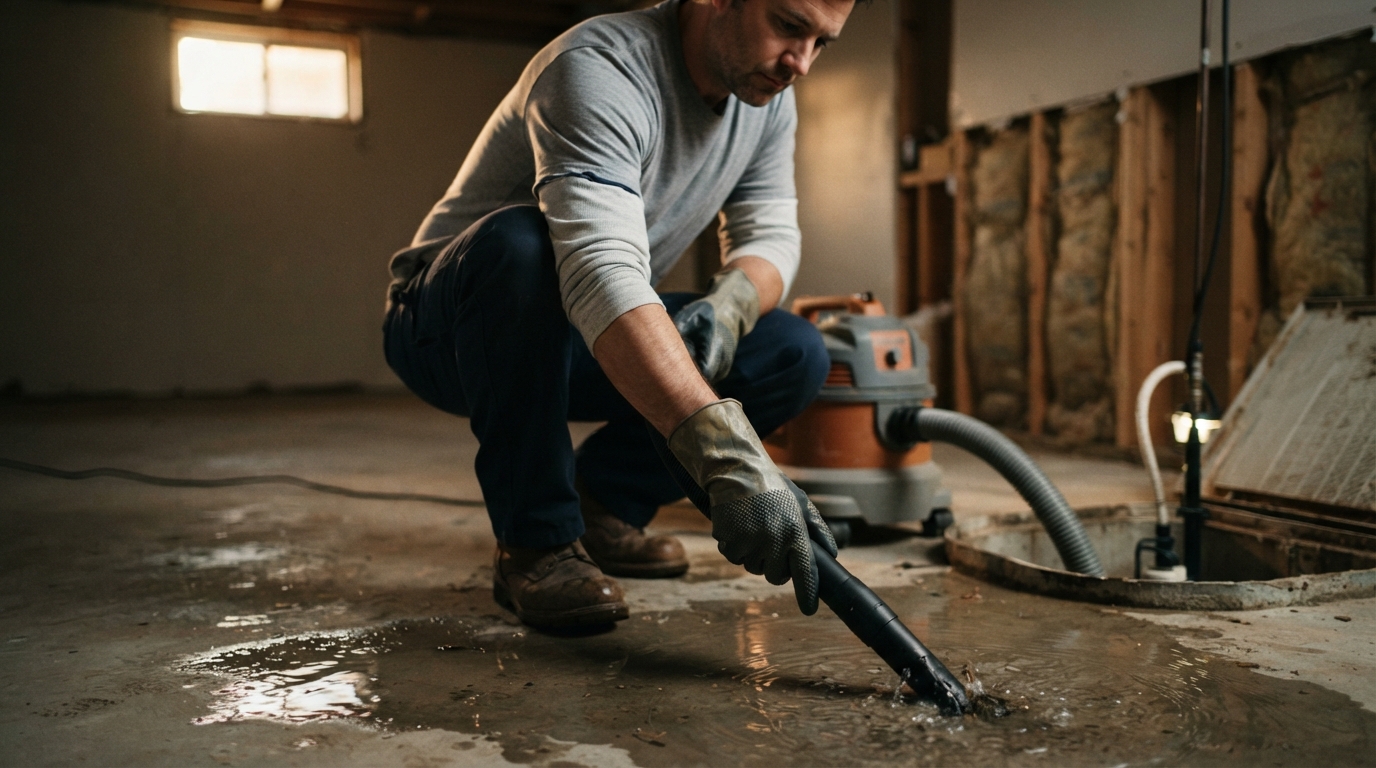
2. Remove standing water. Pumps or wet vacuums extract bulk water first, since drying cannot begin effectively while water is still pooling.
3. Dry the structure. Air movers and dehumidifiers reduce moisture in framing, subfloor, and drywall to prevent mold colonization.
4. Dispose of unsalvageable materials. Porous items soaked for more than a day or two typically need to be discarded rather than dried in place, according to EPA guidance on mold and moisture control .
5. Clean and disinfect remaining surfaces. Hard surfaces that stayed dry-adjacent or were only briefly wet can usually be cleaned rather than removed.
6. Monitor moisture levels before rebuilding. Moisture meters confirm materials have reached a safe range before new flooring or drywall goes back in.
DIY Cleanup vs Professional Water Extraction
Homeowners can handle very minor water intrusion, but larger basement floods usually exceed what a wet vacuum and box fans can safely manage.
| Factor | DIY Approach | Professional Service |
| Water volume | Small spills, a few inches | Several inches to feet of standing water |
| Equipment | Shop vacuum, portable fans | Industrial extractors, commercial dehumidifiers |
| Contamination | Clean water only | Handles gray or black water safely |
| Moisture verification | Visual check only | Moisture meters confirm full drying |
Gray or black water from sewer backups or groundwater carries contamination risks that household cleaning supplies are not designed to address. In those cases, professional extraction and disinfection reduce the chance of lingering bacteria or odor.
Preventing Repeat Flooding After Cleanup
Once a basement is dry, a few maintenance steps reduce the odds of another flood during the next heavy storm.
• Test sump pumps before spring rainy season and install battery backup where possible
• Seal visible foundation cracks and monitor window wells for drainage
• Grade soil away from the foundation to redirect runoff
• Schedule periodic plumbing inspections, particularly for older basement pipe runs
Based in parksiderestoration.com, Parkside Restoration serves properties across Joliet, IL with water extraction, structural drying, dehumidification, and mold prevention after flooding or plumbing failures.
Frequently Asked Questions
How fast does mold grow after a basement flood? Mold can begin developing within 24 to 48 hours of water exposure, which is why prompt extraction and drying matter more than any single cleaning product.
Can I dry a flooded basement with just fans? Fans alone move air but do not remove moisture from the air itself, so pairing fans with a dehumidifier produces faster, more reliable drying results.
Is carpet salvageable after a basement flood? Carpet and padding soaked for more than a day, especially from gray or black water, typically need replacement rather than drying and reuse.
Do insurance policies cover basement flood damage? Coverage depends on the policy and the water source, since many standard homeowner policies exclude groundwater flooding unless separate flood insurance is in place.
Basement flood cleanup decisions often come down to how quickly water is removed and how thoroughly the space is dried before repairs begin. Current service area information for Navigate to Parkside Restoration Using Google Maps is available for reference.