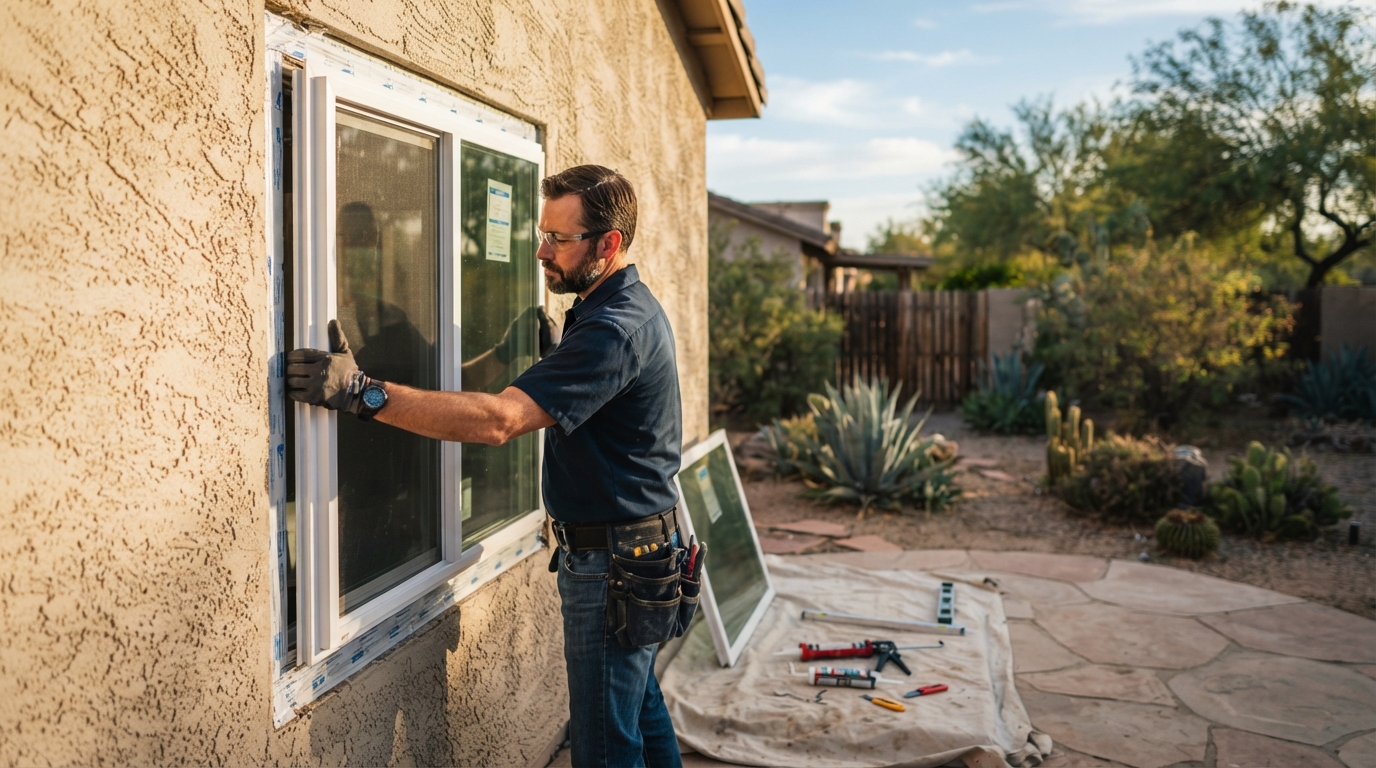
Snapshot:
- Residential window replacement in Tempe, AZ typically involves evaluating frame condition, glass performance, and local energy code before selecting new units.
- Most like-for-like window swaps are routine, but changes to size, egress, or structural framing usually require a permit.
- Low-E, dual-pane glass is the practical standard for meeting Arizona’s climate zone energy requirements.
Replacing windows improves comfort and energy performance in a home, but the process involves more than picking a style. Decisions for Residential window replacement in Tempe, AZ, in desert climates hinge on glass performance, frame material, and whether local permitting rules apply to the scope of work. Understanding these factors before a project starts helps homeowners avoid delays and unnecessary costs.
Tempe’s extended cooling season places specific demands on window performance that differ from cooler regions. Two metrics define whether a window suits this climate: U-Factor, which measures heat transfer resistance, and Solar Heat Gain Coefficient, which measures how much solar radiation passes through glass. Builders and inspectors in the area generally treat SHGC as the deciding factor for homes exposed to long, intense cooling seasons.
Signs a Window Needs Replacing
Not every window problem calls for full replacement. Homeowners can watch for these common indicators before committing to a project:
- Visible condensation or fogging between panes, signaling seal failure
- Drafts or air leaks felt near the frame, even when the window is closed
- Difficulty opening, closing, or locking the unit
- Warped, cracked, or rotting frame material
- Noticeably higher cooling costs without another clear cause
Any one of these issues can justify an inspection, though multiple symptoms together usually point toward replacement rather than repair.
Permits and Code Requirements in Tempe, AZ
Window replacement is not always a simple swap from a permitting standpoint. The city applies the International Energy Conservation Code to the construction, alteration, movement, enlargement, replacement, repair and equipment of residential and commercial buildings. Certain limited scopes are exempt, including storm windows installed over existing fenestration and glass only replacements in an existing sash and frame.
Beyond energy code, most straightforward replacements do not require a permit, but specific changes do trigger one:
| Scope of Work | Permit Likely Required? |
| Like-for-like glass and frame swap | Usually no |
| Changing window size or opening | Yes |
| Modifying egress openings | Yes |
| Adding tempered glass near tubs/showers | Yes |
Arizona’s broader permitting pattern generally reflects this same distinction. Permit required in municipalities; many rural areas have no permit requirement for residential window replacement. Homeowners planning structural changes, not just glass replacement, should confirm requirements with the city before work begins.
Choosing Glass and Frame Performance for Desert Heat
Arizona’s energy code sets maximum U-factor and SHGC limits by climate zone, and compliance in practice usually points to one glass type. According to a regional guide on window and door building codes, windows have to meet the energy code’s U-factor and Solar Heat Gain Coefficient limits for the climate zone, which in practice means a low-E, dual-pane unit.
Frame material also affects long-term performance in high-heat conditions. Vinyl, fiberglass, and aluminum frames each respond differently to prolonged sun exposure and temperature swings, which can influence how well a window seals over time. Homeowners comparing quotes should ask installers for NFRC performance labels on any proposed glass package to confirm it meets the applicable energy standard.
Business Info
Based in USA, Big Box Who? Window Replacement serves customers across Tempe, AZ with window installation work centered on Milgard products and professional installation partners.
Frequently Asked Questions
Does every window replacement in Tempe require a permit? No. Routine like-for-like swaps are generally exempt, but changes to window size, egress openings, or structural framing typically require one.
What glass type meets Tempe’s energy code? A low-E, dual-pane unit is the common standard used to satisfy the area’s U-factor and SHGC limits.
How long does a typical residential window replacement take? Project length varies by scope, but most single-home replacement jobs are completed within a few days once materials are on site.
Can storm windows or glass-only repairs skip the energy code review? Limited scopes such as storm windows over existing frames or glass-only replacements in an existing sash are generally exempt from the full energy code review.
Current scheduling and consultation details for Big Box Who? Window Replacement are published for homeowners reviewing replacement options in the area.