Key point:
- Professional electrical repair addresses wiring faults, panel issues, and outlet hazards that pose fire and shock risks if left unresolved.
- Warning signs include flickering lights, warm outlets, frequent breaker trips, and burning odors near fixtures.
- Licensed electricians follow code-based diagnostic steps that differ from general handyman fixes or DIY attempts.
Electrical repair restores safe, code-compliant function to wiring, outlets, panels, and fixtures that have begun to fail or show warning signs of damage. It typically involves diagnosing the root cause of a fault, not just addressing the visible symptom, which is why licensed electricians are trained to trace problems through a home’s entire circuit system.
Homeowners searching for electrical repair in Englewood, FL, are often reacting to a specific symptom: a dead outlet, a tripping breaker, or a flickering light that will not stop. These symptoms rarely stay isolated. A single warm outlet can point to a loose connection several feet away inside a wall cavity, and ignoring it allows heat to build where it is least visible.
Recognizing When a Home Needs Electrical Repair
Certain signs indicate that a wiring issue has moved beyond a minor inconvenience and into a safety concern. Older homes in coastal climates are particularly prone to corrosion-related faults because humidity and salt air accelerate wear on metal contacts and insulation.
Common indicators include:
- Breakers that trip repeatedly without an obvious cause
- Outlets that spark, feel warm, or discolor around the faceplate
- Lights that flicker or dim without a clear explanation
- Burning smells near wiring, switches, or outlets
- Partial power loss affecting part of a home or a single room
- Buzzing or humming sounds from an electrical panel
According to federal workplace safety guidance, frayed cables, cracked insulation, and worn equipment create immediate shock and fire hazards, and damaged components should be removed from service until a qualified person addresses them, a principle that applies directly to residential wiring as well as job sites. Reviewing OSHA’s electrical safety guidance offers useful context on how professionals assess similar hazards systematically rather than reacting to isolated symptoms.
Why Licensed Repair Differs From DIY Fixes
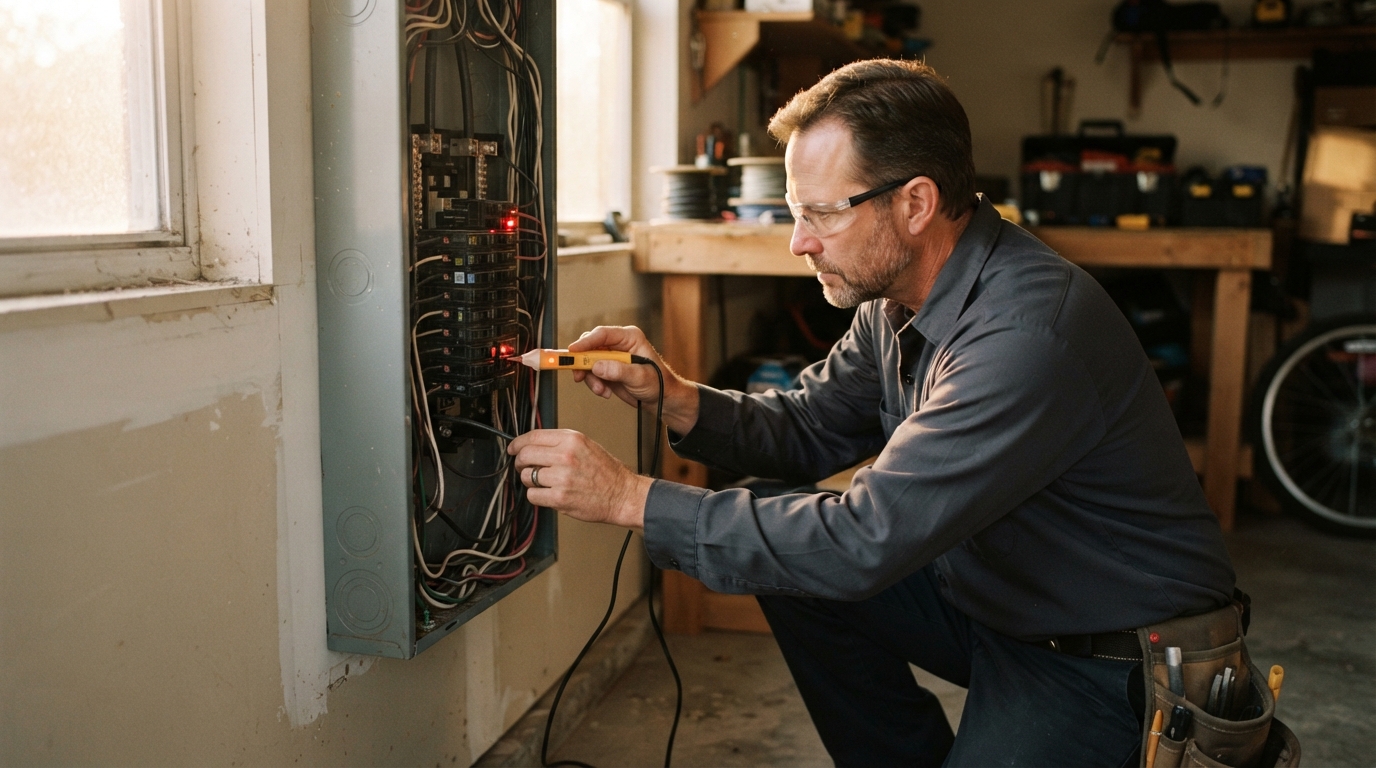
Electrical systems operate on interconnected circuits, so a fix in one location can mask or shift a problem elsewhere. Licensed electricians test voltage, continuity, and grounding before closing up a wall or replacing a cover plate, steps that are difficult to replicate without specialized meters and training.
A short comparison illustrates the practical differences:
| Factor | DIY Attempt | Licensed Electrical Repair |
| Diagnosis | Visual inspection only | Voltage and continuity testing |
| Code compliance | Often unverified | Checked against local electrical code |
| Permit requirements | Typically skipped | Pulled when required by jurisdiction |
| Liability | Falls on homeowner | Covered by contractor licensing |
Permits and inspections exist for a reason: they confirm that panel work, rewiring, or new circuits meet the standards adopted by the local building authority, which matters for both safety and future home sales.
Electrical Repair Needs Specific to Englewood, FL
Humidity, salt exposure, and seasonal storms create conditions that accelerate wear on outdoor outlets, panels, and dock or marine wiring in coastal areas such as Englewood, FL. Homes near waterways often need outlet and panel inspections more frequently than inland properties because moisture infiltration corrodes connections faster.
Storm season also raises the likelihood of power surges and wiring damage from flooding or wind-driven debris. Based in USA, Mike & Mike Services, Inc. serves customers across Englewood, FL, which places repair response within reach of homeowners dealing with these regional conditions.
Property owners in the area should prioritize:
- Scheduling a panel inspection after any major storm event
- Replacing outdoor outlet covers that show cracking or water intrusion
- Addressing flickering lights promptly rather than waiting for full failure
Frequently Asked Questions
How urgent is a tripping breaker? A breaker that trips once under heavy load may simply be protecting an overloaded circuit, but repeated tripping without a clear cause often signals a wiring fault that needs inspection.
Can electrical repair wait until a scheduled appointment? Minor issues like a single dead outlet can often wait a short time, but burning smells, sparking, or buzzing panels warrant immediate attention rather than delay.
Does homeowners insurance cover electrical repair? Coverage varies by policy and insurer, so homeowners should review their specific policy documents or contact their insurance provider directly for details.
Is a permit always required for electrical repair work? Permit requirements depend on the scope of work and local jurisdiction rules, with most routine repairs differing from larger panel or rewiring projects that typically require inspection.
Next Steps for Addressing Electrical Issues
Current contact and service area information for Mike & Mike Services, Inc. is published online for property owners researching local electrical support. Homeowners noticing any of the warning signs described above are encouraged to document the issue and consult a licensed electrician before the problem affects a broader portion of the home’s wiring system.