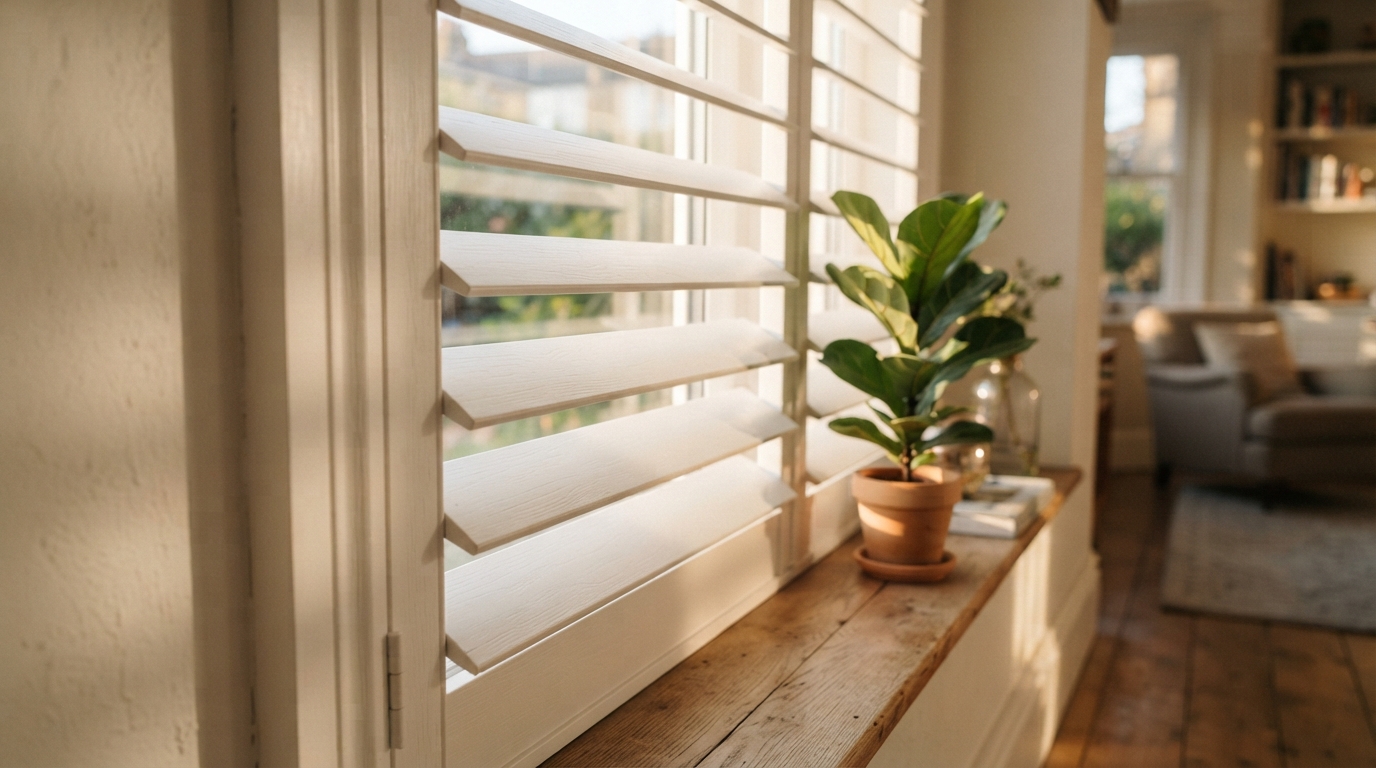
Essentially:
- Plantation blinds use wide horizontal slats, typically 2 to 3.5 inches, set in a solid frame for light control and insulation.
- Material choice (wood, faux wood, or composite) affects durability, moisture resistance, and upkeep in Gilbert, AZ’s desert climate.
- Routine dusting and occasional deep cleaning keep the slats functioning and extend their lifespan.
Plantation blinds are window coverings built with wide, horizontal slats mounted in a solid outer frame that tilts open and closed to control light and privacy. The style gets its name from historical use in large plantation homes, where broad slats allowed airflow while blocking direct sun.
Homeowners searching for Plantation Blinds are usually comparing them against standard mini blinds or shutters, weighing slat width, material, and how well the covering holds up in a hot, dry climate. The wider slats distinguish this style from typical venetian blinds, which usually measure under 2 inches.
Materials Used in Plantation-Style Blinds
Material selection affects how a plantation blind performs over years of use, particularly in rooms exposed to direct sunlight.
- Hardwood: Offers a natural grain and a traditional look, but can warp or crack in humid bathrooms or kitchens.
- Faux wood (PVC or composite): Resists moisture and fading, making it a common choice for sun-facing rooms.
- Engineered wood composite: Combines a wood core with a protective coating, balancing appearance with added durability.
For homes in Gilbert, AZ, where summer temperatures regularly climb above 100 degrees, faux wood and composite options tend to hold their shape better than solid hardwood exposed to prolonged heat near windows.
Common Styles and Slat Configurations
Plantation blinds are not a single uniform product. Slat width, frame style, and control mechanism all vary by manufacturer and room function.
| Feature | Standard Slat (2 inch) | Wide Slat (3.5 inch) |
| Light control | Moderate, more slats per panel | Fewer gaps, broader light blockage |
| View when open | Narrower sightlines | Wider, more open view |
| Best for | Smaller windows | Large windows, patio doors |
| Visual style | Traditional | Contemporary |
Control options also differ. Traditional tilt wands remain common, while cordless and motorized mechanisms have become more widely available for households prioritizing child and pet safety. The Consumer Product Safety Commission has published guidance on corded window covering hazards, which is a relevant consideration when selecting a control style for homes with young children.
Maintenance and Care Guidance
Routine upkeep keeps the tilt mechanism smooth and slats free of dust buildup that can affect airflow near windows.
- Dust weekly with a microfiber cloth or a vacuum brush attachment, working along each slat with the blinds closed.
- Spot-clean faux wood or composite slats with a damp cloth and mild soap; avoid saturating wood blinds.
- Check the tilt mechanism periodically for resistance or uneven slat alignment, which can indicate a worn cord or gear.
- Inspect for sun damage on south- and west-facing windows, since prolonged UV exposure can fade or warp certain materials faster than others.
In Gilbert, AZ, where intense sun exposure is a year-round factor, faux wood or composite blinds generally require less frequent conditioning than solid hardwood, which may need occasional oiling to prevent cracking.
Frequently Asked Questions
What slat size is best for large windows? Wider slats, generally 3.5 inches, are often preferred for large windows or sliding doors because they reduce the number of visible seams and allow a broader view when open.
Are faux wood blinds better than real wood for hot climates? Faux wood and composite materials typically resist warping and fading better than solid hardwood when installed on windows that receive extended direct sunlight.
How often should plantation blinds be cleaned? Weekly dusting combined with a deeper damp-cloth cleaning every few months is a reasonable schedule for most households, depending on dust levels and window exposure.
Can plantation blinds be motorized? Many manufacturers offer motorized or cordless control options as an alternative to traditional tilt wands, primarily for convenience and child safety reasons.
Business Information and Next Steps
Based in Tempe, AZ, Arizona Shutter Company serves customers across Gilbert, AZ.
Readers can Visit Our Showroom for published location and contact details.