Bottom line:
• Schools need IT support that covers network reliability, device management, and cybersecurity planning together, not as separate add-ons.
• A CISA-backed K-12 resource package now outlines eight cybersecurity objectives for districts of any size or budget.
• Education-focused IT support should fit school schedules, compliance needs, and limited internal staffing.
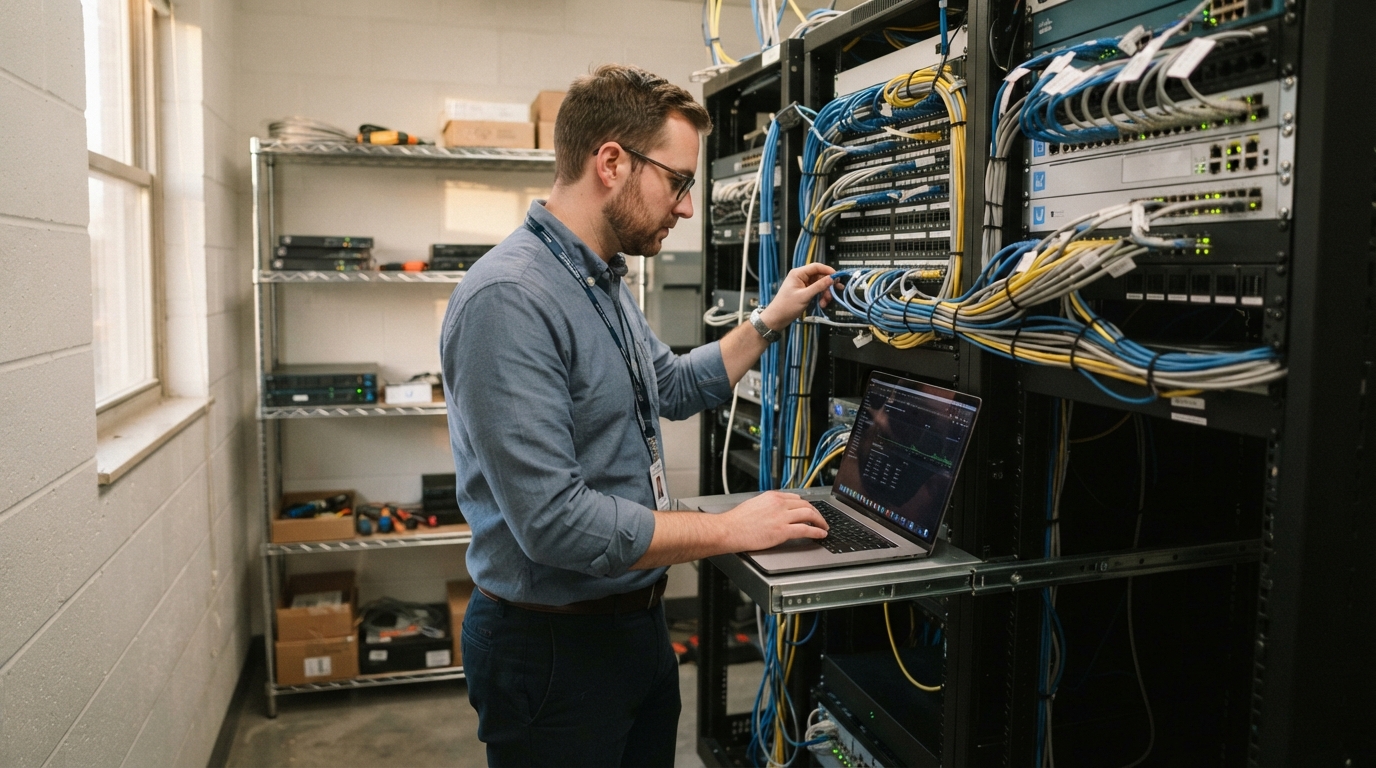
Reliable IT Support For Education means having network infrastructure, device management, and cybersecurity planning handled as one coordinated system rather than disconnected fixes. Schools that treat these pieces separately tend to experience more downtime during testing periods, enrollment surges, or ransomware attempts.
Classrooms today depend on connected devices for attendance, grading, communication, and instruction. When a server goes down or a network slows during a lesson, the disruption affects teachers, students, and administrative staff at the same time. WCA Technologies helps schools prevent these interruptions with responsive technical support, proactive monitoring, and dependable systems management, so educators can stay focused on teaching while their technology works quietly in the background.
What Education-Focused IT Support Actually Covers
Supporting a school system requires more than general tech troubleshooting. An effective IT partner for an educational setting should be able to address several areas at once:
• Network infrastructure that handles high device density across classrooms and offices
• Cloud services for shared drives, grading platforms, and communication tools
• Device management for laptops, tablets, and shared lab computers
• Cybersecurity planning, including login protection and data handling policies
• Help desk support for day-to-day technical issues
• Backup and disaster recovery planning in case of outages or attacks
Each of these functions connects to the others. A school without consistent device management, for example, often struggles to apply security patches evenly, which creates gaps attackers can exploit.
Why Cybersecurity Has Become a Core Part of School IT
School districts face a different threat profile than most small businesses, partly because of the sheer number of devices and users connected to their networks. Federal guidance released in 2026 outlines why this has become a bigger concern. According to the cybersecurity and infrastructure security agency, the K-12 Cybersecurity Foundations Getting Started Guide was built to help school and district leaders implement fundamental cybersecurity controls regardless of their size, expertise, or funding level.
The guidance also responds to documented incident data. The most common cybersecurity threats that K-12 schools face include data breaches, ransomware attacks, business email compromises, and denial of service attacks. CISA has noted that cybersecurity can often take a back seat to other priorities in school systems, as districts are frequently forced to choose between instructional needs and IT infrastructure spending.
For New York, NY schools and districts, this tension is familiar. Budget cycles, aging hardware in older buildings, and limited internal IT staff can all slow down security upgrades even when the risk is well understood.
Matching Support Models to School Needs
Not every school needs the same level of outside IT involvement. The table below outlines three common support models and what each generally covers.
| Support Model | Typical Coverage | Best Fit |
| In-house only | Daily troubleshooting, basic maintenance | Larger districts with dedicated IT staff |
| Co-managed IT | Shared responsibility between internal staff and an outside provider | Schools with a small IT team needing backup |
| Fully outsourced IT | Network management, help desk, security, and backups | Smaller schools or those without dedicated IT staff |
Choosing between these models typically depends on staffing levels, budget, and how much risk a school is willing to carry internally. A co-managed approach often works well for districts that have some technical staff but need additional coverage for cybersecurity monitoring or after-hours support.
Based in USA, Visit WCA Technologies serves customers across New York, NY, working with organizations that need consistent technical support without maintaining a large internal IT department.
Frequently Asked Questions
What does IT support for a school typically include? It generally covers network management, device oversight, cloud services, help desk support, and cybersecurity planning tailored to how a school operates day to day.
Why do schools need specialized IT support instead of general business IT? Schools have unique scheduling, compliance, and user-access needs, including managing accounts for students, staff, and guest devices across a single network.
How often should a school review its cybersecurity plan? Federal guidance suggests ongoing review rather than a one-time setup, since foundational cybersecurity objectives include protecting login credentials, safeguarding devices, testing backups, and developing long-term cybersecurity plans.
Can smaller schools afford dedicated IT support? Co-managed or outsourced models allow smaller schools to access network and security support without funding a full internal IT department.
Staying Informed on School IT Planning
Published details for Visit WCA Technologies cover the service area supporting organizations in the region.
Technology planning in schools continues to shift as federal guidance and threat patterns evolve, making it worthwhile for administrators to revisit their IT setup on a regular schedule rather than only after a problem occurs.